
The writers and books that recorded Black rugby, cricket, football and netball history when official records tried to erase it
A photograph can sometimes do what an official archive refuses to do: place a person back into history.
In one image reproduced in Dougie Oakes’ Hassan Howa – No Normal Sport, Howa sits at the top table of the United Democratic Front’s founding conference. It is more than a record of attendance. It is evidence that sport under apartheid was never merely a pastime. It was a political battlefield, a community institution and, for many people, a language of dignity.
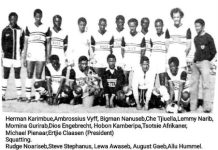
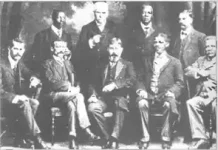
South African sporting history has often been told through the trophies and biographies of celebrated white institutions. Yet Black players, administrators, coaches and clubs built parallel traditions in conditions designed to deny their existence. Their matches were played on poor fields, their photographs kept in family albums, and their achievements remembered orally long after official record-keepers had looked away.
The books that recovered these histories did more than fill gaps. They challenged the idea that Black South Africans were newcomers to cricket, rugby, football or netball. They showed that talent, organisation and sporting culture existed long before racial integration became official policy.
In 2026 these books remain essential, because Transformation cannot be understood without knowing what came before it.
Cricket’s Hidden Inheritance
The foundational work is André Odendaal’s The Story of an African Game: Black Cricketers and the Unmasking of One of Cricket’s Greatest Myths, 1850–2003, published by David Philip in 2003.
The book was the culmination of almost three decades of research and the first major work to document in detail the history of Black African cricketers in South Africa. Odendaal used rare nineteenth-century African-language newspapers, family photographs and interviews to reconstruct a sporting tradition that had run parallel to white cricket for more than a century.
His history begins with mission schools, village matches, inter-town tournaments and early Black cricket clubs. In doing so it dismantled one of South African Sport’s most damaging myths: that Black people had no established cricket culture before transformation.
Nelson Mandela’s foreword gave the project national moral weight. He wrote that during apartheid “black people were deliberately erased from history, and their experiences were negated.” Then Sports Minister Ngconde Balfour said the book filled a vacuum of untold stories and restored the dignity of generations of cricketers denied opportunities others had taken for granted.
The Story of an African Game changed the national conversation. It did not ask the country to be generous to Black cricket. It demonstrated that Black cricket had already earned its place in the national story.
Isaiah Bud-M’belle Returns
The new biography of Isaiah Budlwana “Bud” M’belle extends this history back into the early twentieth century.
Written by Brian Willan and Brown Maaba, Isaiah Bud-M’belle: The Life of Isaiah Budlwana M’belle, 1870–1947 (Jacana Media, 2026) restores a remarkable figure long remembered mainly as the brother-in-law of Solomon Plaatje.
M’belle became the first African to pass the Cape civil service entry examinations and later worked as a respected High Court interpreter. He also helped organise non-racial cricket and rugby, supported education, and served as general secretary of the South African Native National Congress.
His story reveals that early non-racial sport did not emerge suddenly in response to apartheid. It had intellectual, educational and organisational roots in Black communities decades earlier. Sport was part of a wider programme of self-development and political assertion.
Rugby Beyond the Springbok Story
Rugby history has long been dominated by the white Springbok narrative. That story is important, but incomplete.
Abdurahman Manie Booley’s Forgotten Heroes: History of Black Rugby, 1882–1992 (1998) remains one of the most important attempts to correct the imbalance. Researchers have described it as the most comprehensive coverage of Black rugby in South Africa, although it is now difficult to find.
Newer work continues the recovery. Omar Esau’s Scrumming Against All Odds: Voices of SARU Rugby Legends (Burnet Media, 2025) gathers the stories of fifteen players connected to the non-racial African Rugby">African Rugby">South African Rugby Union. These accounts restore the club as the centre of sporting life — places such as Roslyns and Primroses where the struggle happened on ordinary grounds, week after week.
Thando Manana’s Living Testimony
Thando Manana’s story connects the older history to the post-1994 era.
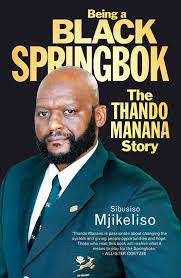
Sibusiso Mjikeliso’s Being a Black Springbok: The Thando Manana Story records Manana’s journey from New Brighton in Gqeberha to the Springbok jersey. He began playing rugby only at 16 and became the third Black African player to wear the national jersey after unification, making his debut in 2000.
The book’s significance lies not only in the achievement. Manana’s route challenges the idea that transformation is simply a matter of opening a previously closed door. His story exposes unequal pathways into elite sport: access to coaching, transport, nutrition, facilities, schooling and social networks.
Manana has continued to contribute to public memory as a commentator and outspoken voice. He does not treat transformation as a completed project.
Hassan Howa and the Politics of “Normal” Sport
If Odendaal restored the depth of Black cricket, Dougie Oakes’ No Normal Sport restores the force of its political conscience.
Published by Fanele in 2026, Hassan Howa – No Normal Sport… A Biography of His Life and Times tells the story of the cricketer and activist who refused to separate sport from political struggle. The title comes from the principle that there could be no normal sport in an abnormal society.
Howa was a founding member of the South African Cricket Board of Control in 1947 and later a leading figure in SACOS. His campaign helped expose international cricket’s willingness to tolerate racial exclusion and contributed to the isolation of apartheid sport.
The phrase “No, no, no to racist sport!” captured the movement’s moral clarity. Howa’s story remains a reminder that transformation without justice can become another form of absorption.
Football’s Crowded but Incomplete Archive
Football was arguably the most extensive Black sporting culture under apartheid, yet its written history remains uneven.
Peter Alegi’s Laduma!: Soccer, Politics and Society in South Africa is an essential starting point. It shows how football became central to Black social life in cities, mines, townships and villages.
Research on township and “kasi” football, together with local histories such as Lorraine Richards’ The Unsung Legends of Wentworth Football, demonstrate what becomes possible when communities are properly listened to. The history of SACOS football and many of the Bafana pioneers still requires much more systematic documentation.
Netball’s Quieter Archive
Netball presents the sharpest warning about the limits of the existing record.
Despite its enormous popularity among women, netball has received comparatively little historical attention. Scholars have described it as one of the most neglected areas of South African sports history.
Francois Johannes Cleophas has undertaken important work on netball in Black communities in Cape Town from the early twentieth century to the 1960s. Hendrik Snyders has also drawn attention to the gaps. There are still no widely read foundational works on Black netball comparable to Odendaal’s cricket history or Booley’s rugby history.
That absence is not evidence that the history is thin. It is evidence that the archive has not been adequately collected.
Why These Books Still Matter
These books matter because transformation is not an abstract policy debate. It is a living inheritance.
Every time a young player learns that people from their community played, organised and resisted before them, the field becomes larger. Every time an old photograph is identified or an out-of-print book is read again, historical erasure loses ground.
The work is unfinished. South Africa still needs full histories of Black women’s cricket, township football in every province, rural and regional rugby, SACOS football, the early Bafana pioneers, and the development of Black netball. The country needs biographies of coaches, referees, club founders and administrators whose work made elite achievement possible.
The books already written have ensured that the history did not die.
Books to Read Next
- The Story of an African Game — André Odendaal (David Philip, 2003)
- Isaiah Bud-M’belle — Brian Willan & Brown Maaba (Jacana, 2026)
- Hassan Howa – No Normal Sport — Dougie Oakes (Fanele, 2026)
- Forgotten Heroes: History of Black Rugby, 1882–1992 — Abdurahman Manie Booley (1998)
- Being a Black Springbok — Sibusiso Mjikeliso
- Laduma! — Peter Alegi
- Scrumming Against All Odds — Omar Esau (2025)
- Reverse Sweep — Ashwin Desai (Jacana, 2017)